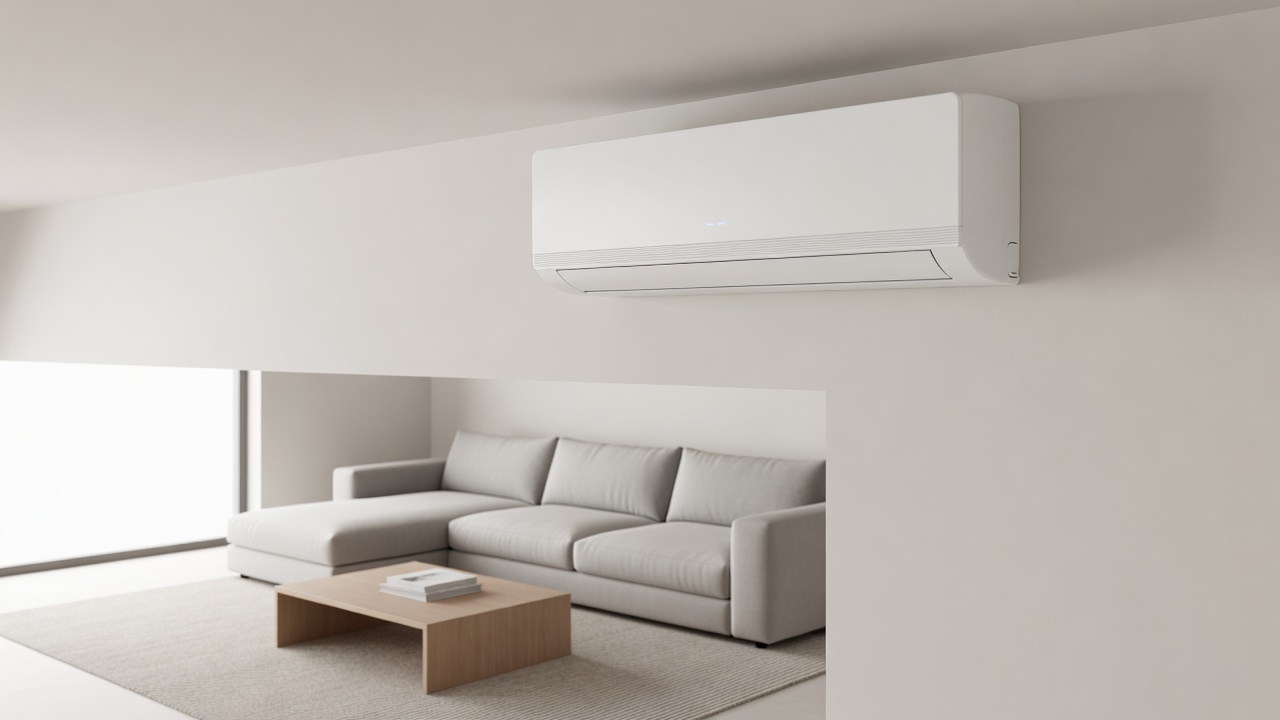
For decades, homeowners faced a stark choice: rip open their walls to install the extensive ductwork required for a central AC system, or suffer the noise and aesthetic disruption of multiple window units. The mainstream adoption of the ductless mini-split system has fundamentally altered the landscape of residential climate control, offering a premium third option that combines the power of central air with unparalleled flexibility.
What Exactly is a Mini-Split?
A ductless mini-split operates on the same basic thermodynamic principles as a standard central air conditioner—using compressed refrigerant to absorb and move heat—but it alters the delivery mechanism. Instead of pushing cooled air through a labyrinth of ducts hidden in attics or basements, a mini-split delivers the conditioning directly to the room via compact, wall- or ceiling-mounted indoor air handling units.
These indoor 'heads' are connected to a single outdoor compressor unit via a small bundle of copper refrigerant lines, power cables, and a condensate drain. This line set requires only a tiny hole (typically three inches in diameter) drilled through the exterior wall, making installation drastically less invasive than retrofitting ductwork in an older property.
Multi-Zone Cooling and Inverter Technology
One of the most compelling arguments for ductless systems is their intrinsic zoning capability. A single outdoor condenser can often support anywhere from three to eight separate indoor heads depending on capacity. Because each indoor unit is operated by its own thermostat (or remote control), occupants can maintain different temperatures in different rooms.
Furthermore, almost all modern mini-splits utilize inverter-driven compressors. Older, traditional AC compressors are strictly single-stage: they are either 100% on or completely off, leading to temperature swings and high electrical startup surges. An inverter acts like the accelerator pedal on a car, allowing the compressor to smoothly ramp up or down to precisely match the cooling demand of the space. This continuous, low-power operation drastically reduces electricity consumption while maintaining a steady room temperature.
Heating Capabilities: The Heat Pump Advantage
The vast majority of mini-splits are not just air conditioners; they are reversible heat pumps. By utilizing a reversing valve, the system can simply run the refrigeration cycle backwards during the winter. Instead of extracting heat from the indoor air and dumping it outside, it extracts ambient heat from the outdoor air (even in freezing temperatures) and pumps it inside.
Advancements in hyper-heating technology have made modern mini-split heat pumps viable primary heating sources even in bitterly cold climates, reducing reliance on expensive fossil fuel combustion heating systems.
Considerations Before Installing
While mini-splits offer tremendous benefits, they present specific aesthetic and maintenance considerations. The indoor units are highly visible; they sit prominently on the upper portions of walls. While manufacturers have made strides in creating sleek, low-profile designs—and offer ceiling cassette options for those willing to do minor drywall work—they will never be as invisible as a standard floor register.
Additionally, while installation bypasses major construction, it still requires a certified HVAC technician. Refrigerant lines must be flared perfectly, vacuum-tested, and pressurized with exact amounts of chemical charge. On the exterior, the conduit covering the line sets running down the side of the house must be carefully routed to avoid looking industrial or cluttered.
Maintenance is straightforward but requires homeowner diligence. The indoor units feature washable mesh filters that must be cleaned monthly. Because they handle significant amounts of air directly in the living space, neglecting filter cleaning will rapidly degrade the unit's efficiency and can lead to moisture buildup and mold on the interior blower wheels.