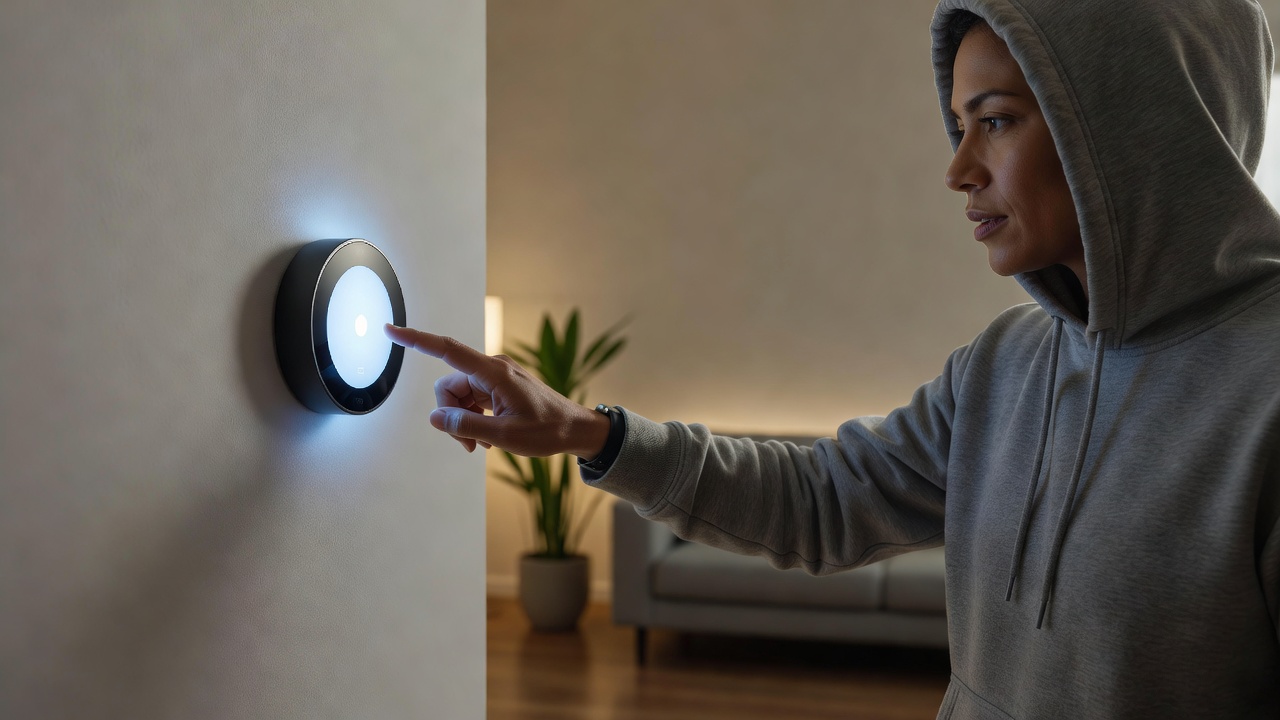
In the past, interacting with an air conditioner meant walking over to a wall and spinning a plastic dial, hoping the resulting temperature shift aligned with your comfort expectations hours later. Today, smart HVAC controls have fundamentally shifted this paradigm. By leveraging constant internet connectivity, spatial awareness, and machine learning, intelligent controllers remove the guesswork from cooling your home while aggressively minimizing energy waste.
Upgrading Central Systems with Smart Thermostats
For homes equipped with central heating and air conditioning, the primary upgrade path is installing a smart thermostat. These devices replace the standard wall unit and tie directly into the low-voltage control wires of the air handler.
A connected thermostat's most apparent benefit is remote accessibility via smartphone applications, allowing you to turn on the AC before you leave the office. However, the true value lies in automation. Using geofencing technology, the system tracks the GPS location of household members' phones, allowing the AC to enter a low-power "away" mode when the house is empty, and automatically beginning to cool the space as soon as someone crosses a predetermined geographic boundary on their way home.
Making 'Dumb' Units Smart: Infrared Controllers
Not everyone has central air. Millions of homes rely on window units, portable ACs, or ductless mini-splits that were manufactured without Wi-Fi capabilities, responding only to traditional infrared (IR) remote controls. This is where smart AC controllers shine.
These devices are essentially Wi-Fi-enabled infrared blasters. They sit in the same room as your air conditioner and maintain a line of sight to the unit. After a quick setup process where they clone the signals from your existing remote, these hubs connect to your home Wi-Fi network. This elegantly bridges the gap between older hardware and modern conveniences. Suddenly, a basic fifteen-year-old window unit can be scheduled, controlled via voice assistants, and monitored remotely, extending the utility of the hardware without requiring an expensive replacement.
Energy Monitoring and Analytics
A critical advantage of digitized climate control is the generation of data. Many smart controllers feature comprehensive energy dashboards that detail exactly how many hours the compressor ran on any given day. By comparing this runtime data against local weather history, users can visualize the direct financial impact of turning the thermostat down a few extra degrees during a heatwave.
Furthermore, these systems can provide proactive maintenance alerts. By tracking abnormal runtimes or sensing restricted airflow, a smart thermostat can warn a homeowner that the air filter needs changing or that the system is struggling to maintain temperature—often before a catastrophic hardware failure occurs.
Integration with Broader Ecosystems
Smart AC controllers rarely operate in isolation. They are designed to hook into larger smart home hubs and automation routines. For example, a system can be programmed to automatically draw motorized window blinds during peak afternoon sun to reduce the solar heat gain, thereby lightening the load on the air conditioner. As homes become increasingly digitized, treating your cooling system as a reactive participant in a holistic energy strategy is rapidly becoming the new standard.