When central air conditioning is structurally impossible or financially out of reach, localized cooling systems step in to bridge the gap. The two heavyweights in this category are the traditional window-mounted air conditioner and the freestanding portable air conditioner. While both accomplish the same fundamental task—removing heat and humidity from an enclosed space—their engineering differences dictate completely different use cases.
Choosing between them requires a realistic assessment of your living situation. Renters, homeowners subject to stringent Homeowner Association (HOA) regulations, and those living in historic properties with incompatible windows all face unique constraints that will heavily influence the final decision.
Window Air Conditioners
Window units have been the standard bearer of room cooling for decades, and for good reason: they are incredibly efficient at what they do. A window AC houses all the components of the refrigeration cycle—compressor, condenser, expansion valve, and evaporator—in a single rigid box that straddles the boundary between indoors and outdoors.
Because the heat-generating compressor and the condenser coils hang outside the window, the bulk of the operational noise and extracted heat is kept outside the living space. Furthermore, their position in the window means they do not occupy any valuable floor space, a critical advantage in smaller bedrooms and studio apartments.
The Challenges of Window Units
The primary barrier to window units is installation. They require specific window types—typically standard double-hung windows—to securely lock into place. Casement windows (which crank outward) or narrow sliding windows often cannot accommodate standard models without extensive custom framing. Additionally, heavy units present a genuine safety hazard; improper installation without robust external support brackets can lead to catastrophic falls, particularly in multi-story apartment buildings. Finally, for the duration of the cooling season, that window is effectively sealed shut and blocks a significant portion of natural light.
Portable Air Conditioners
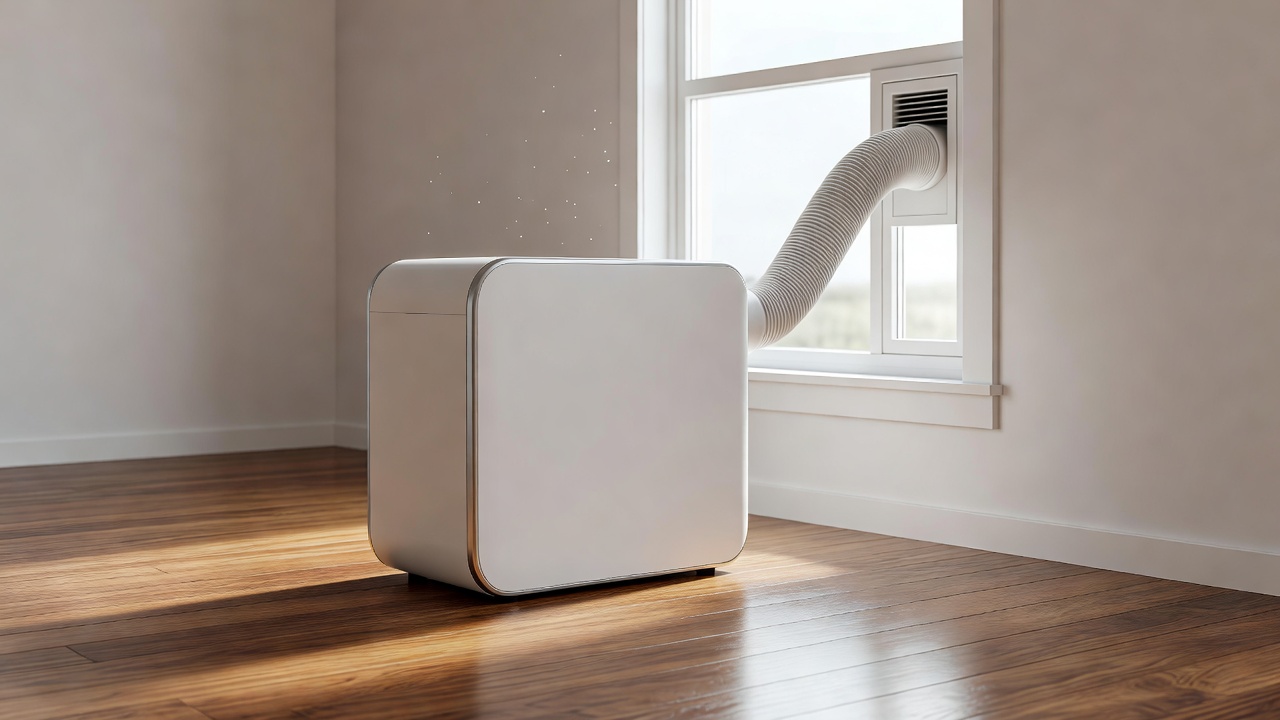
Portable air conditioners are self-contained floor units that sit entirely inside the room. To exhaust the heat they extract from the air, they utilize one or two large, flexible hoses routed to a window via an adjustable plastic panel. This exhaust panel is much thinner and lighter than a heavy window unit, making it adaptable to a wider variety of window shapes, including casement and sliding styles.
The defining advantage is mobility. Caster wheels allow the user to roll the unit from a home office during the day to a bedroom at night, requiring only the movement of the exhaust hose setup. Furthermore, HOA rules that prohibit window units protruding from the facade of a building rarely ban portable units, as their window panels are virtually flush with the exterior.
The Downside of Portables
Despite their convenience, portable units are inherently less efficient than their window-mounted cousins. The compressor operates inside your living space, meaning the machine generates heat and noise exactly where you are trying to eliminate it. Single-hose portable models face an additional physics problem: by blowing indoor air out the window to carry away heat, they create negative air pressure inside the room. This vacuum forces warm, unconditioned air to seep in through gaps under doors and around window frames, fighting the unit’s cooling efforts.
Dual-hose models solve the negative pressure issue by dedicating one hose to draw in outside air for the condenser and the second hose to exhaust the heat, greatly improving efficiency, though they tend to cost more upfront.
Direct Comparison and Verdict
When measuring dollar-for-dollar cooling power, a window unit will universally outperform a portable unit of equivalent British Thermal Unit (BTU) rating. Window units cool faster, run quieter, and cost less to operate over the course of a summer.
However, optimal performance is irrelevant if you cannot physically or legally install the device. If your building regulations prohibit window units, if physical limitations make lifting a heavy metal box perilous, or if you simply cannot sacrifice your window’s functionality, a portable air conditioner is a highly viable, necessary alternative. For the best portable experience, prioritize dual-hose models and recognize that they will consume some floor space and contribute to the ambient noise floor of the room.